Amanda Folck, Extension Educator: Turfgrass Management
Presented at the 2024 Nebraska Turfgrass Field Day
Recently in Nebraska, there has been more interest in the application of warm-season grasses, specifically the adaptation of bermudagrass. But first is to look at the background on how the environment has changed to increase the possibility of warm-season grasses adaptation in select areas of Nebraska and how it influences bermudagrass in turfgrass areas.
Information from the USDA Plant Hardiness Zone Map
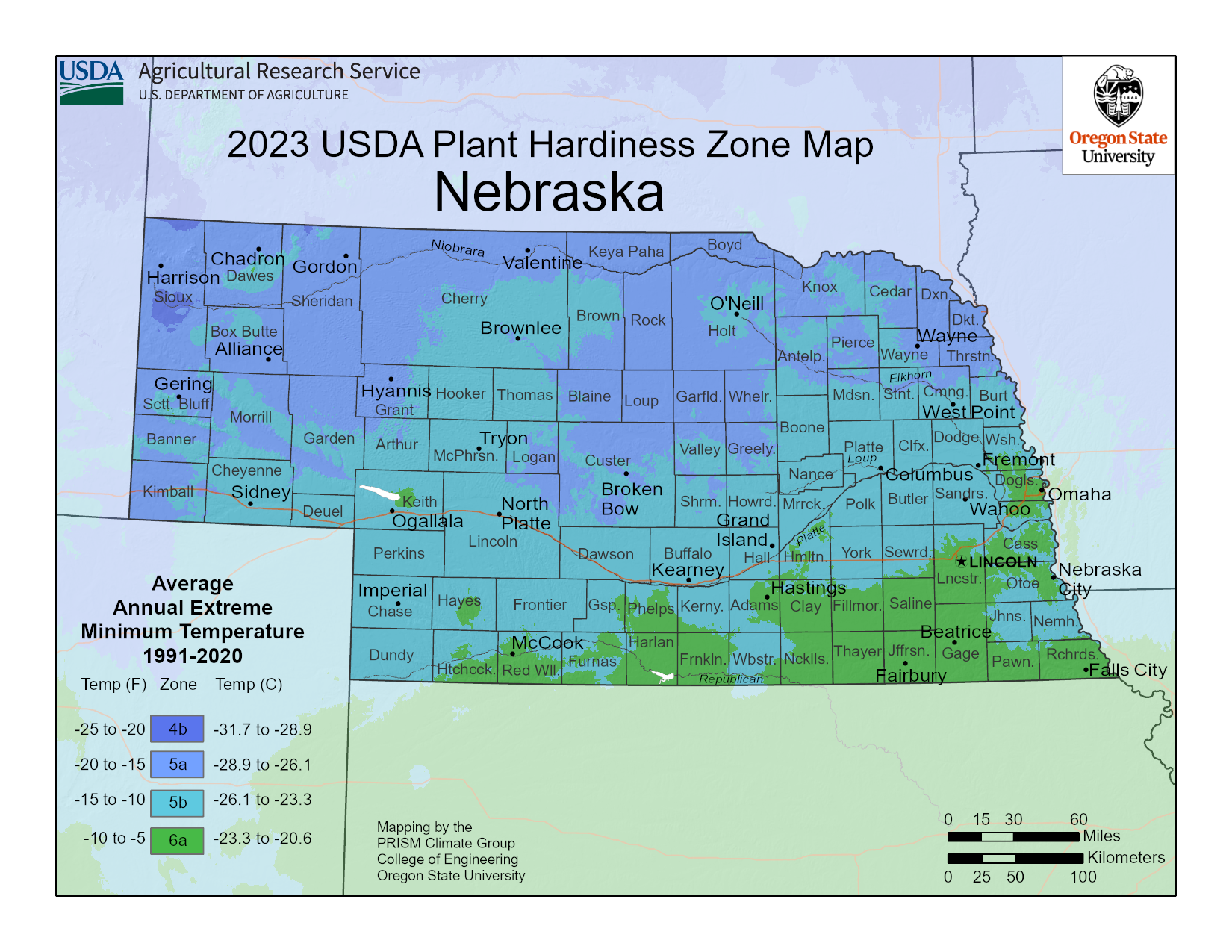
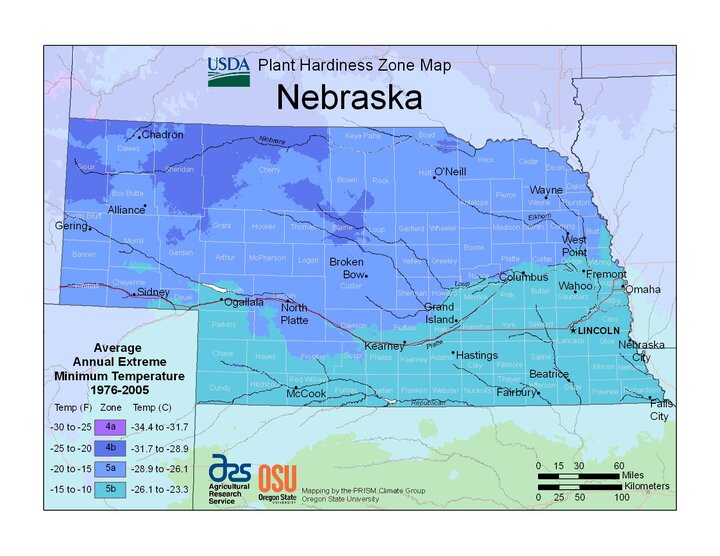
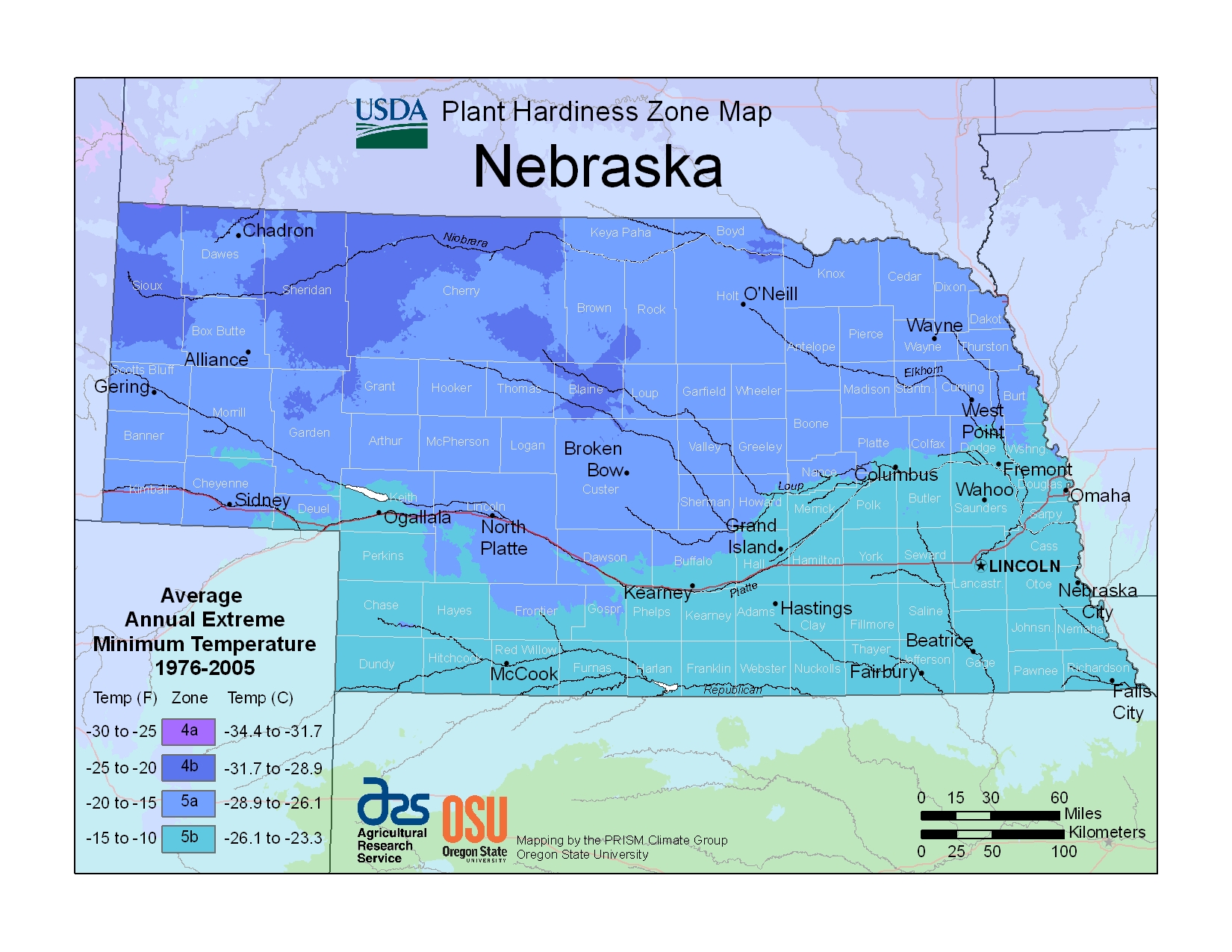
According to the recent USDA Plant Hardiness Zone Map, released in 2023, Nebraska has 4 different zones, one zone is 10-degree increments based on average annual extreme minimal temperature from 1991-2020 from zones 4b to 6a (Figure 2). A higher range of minimum temperatures compared to 2013 where the zones from 1976 to 2005 had a lower range from 4a to 5b (Figure 1).

One of the notable changes to the last update of the hardiness zone from 2013, is the expansion of the 6a zone crossing the Kansas-Nebraska state line. The expansion of the 6a zone varies in the southern parts of Nebraska, including the cities of McCook, Fairbury, Beatrice, to Falls City. This has also expanded to areas of Lincoln, Omaha, and Hastings, and will also expand to areas with a 6a zone. Areas in the 6a zone can be possible areas with the incorporation of warm-season grasses.
Bermudagrass in Nebraska
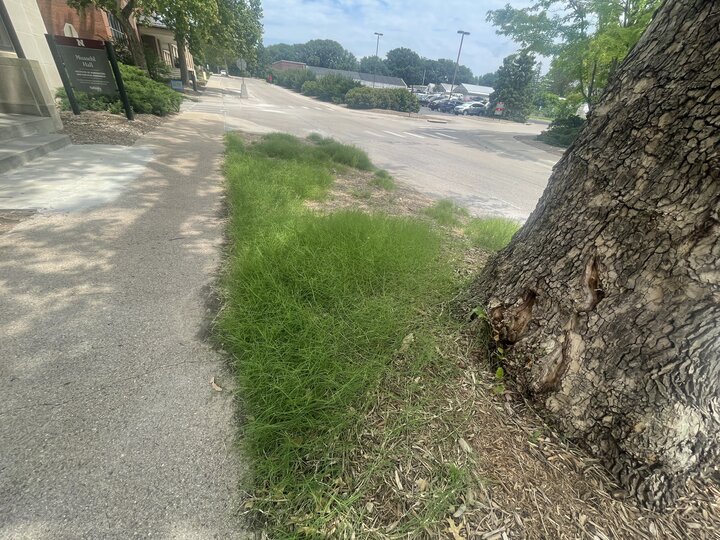
In Nebraska, common bermudagrass is considered a weed. An example of its weed presence is at UNL East Campus in Lincoln, shown in Figure 3. The continuation of warmer conditions helps the bermudagrass spread due to its vegetation into other areas.
Various establishment of bermudagrass includes sod, plugs, sprigging, or seeding. However, for hybrid bermudagrass, it is done with vegetative establishment only (Christians et al. 2017). With new technology in genetics, hybrid bermudagrass can grow in cooler environments. Currently, in the Midwest, the use of hybrid bermudagrass has expanded with cultivars like Tahoma 31 in northern climates such as the NFL team Chicago Bears in Chicago, Illinois.
The positives of bermudagrass are the growth and spread of its rhizomes and stoloniferous growth, recovery of traffic, adaptation to heat, and drought tolerance. The negatives of bermudagrass are not grow well in shade and has poor cold tolerance when soil temperatures are below 50°F, leading to dormancy.
Management in Bermudagrass
Thatch management is important for warm-season grasses like bermudagrass because of their higher productive growth of rhizomes and stolons. If the thatch is less than 1 inch, it is okay to keep. If it is greater than 1 inch, it needs to be managed with scarification/dethatching. Overseeding is using cool-season grass for coverage as bermudagrass goes into dormancy, yet still has coverage from continuing traffic. There are herbicides available to kill the cool-season grass and do not affect the warm-season grass as a result of overseeding in the fall.
Summary
The recent zone changes in 6a for the southern part of Nebraska and into Lincoln and Omaha can lead to interest in bermudagrass. The plant hardiness zone map is one of many tools to use for determining a favorable environment for warm-season grasses like bermudagrass. Also, consider types of establishment for bermudagrass, vegetative or seed, in your area and understanding of increased cultural practices on management of bermudagrass.
References
Christians, N., A.J. Patton, and Q.D. Law. 2017. Fundamentals of Turfgrass Management. 5th edition. John Wiley & Sons. Hoboken, NJ.
Miller, G. 2026. "Ryegrass Removal Techniques". Q&A with Dr. Grady Miller. p. 46. SportsField Management, May 2026.
United States Department of Agriculture (USDA). USDA Plant Hardiness Zone Map Nebraska.
United States Department of Agriculture (USDA). 2023 USDA Plant Hardiness Zone Map Nebraska.