
Introduction
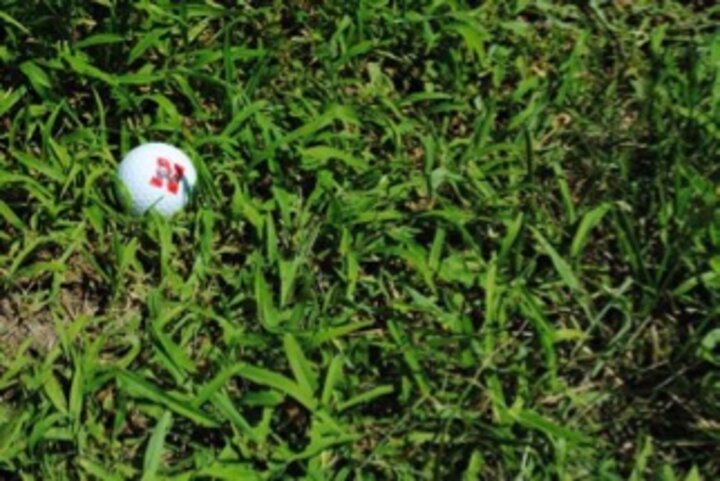
Crabgrass (Digitaria spp.) is one of the most problematic grassy weeds in turfgrass, especially in the summer when it is aggressively growing and the desired cool-season turf is fading from summer stress. Crabgrass is a summer annual, germinating in spring when soil temperatures are sustained between 55 and 60°F, begins flowering and setting seeds in July and is killed by frost in the early fall. A mature crabgrass plant can produce up to 700 tillers and 150,000 seeds in the upper Midwest region. There are thirteen weedy Digitaria species in the United States, but the two most common species in Nebraska and the Upper Midwest are smooth crabgrass (D. ischaemum) and large or hairy crabgrass (D. sanguinalis). The major distinction between the two is the presence or absence of hair on the leaves and stem. Smooth crabgrass generally tolerates lower mowing heights than large crabgrass, but both will produce seed at typical lawn mowing heights.
Green (Setaria varida) and yellow foxtails (Setaria glauca) are also summer annual grasses common in lawns in the north central US. Both of these grasses germinate slightly later than crabgrass with prolonged soil temperatures at 60 to 65°F. Green foxtail has a tight cylindrical seedhead, while yellow foxtail has a looser cylindrical seedhead. Goosegrass (Eleusine indica) is prostrate growing and has silvery to white leaves near its base, thus often referred to as silver crabgrass. This grass germinates slightly later than the foxtails at soil temperatures 60 to 70°F.
Menu of Areas on Info
Cultural Controls
Crabgrass and other summer annual grassy weeds invade a lawn often because growing conditions favor its growth over the desirable turf. Improving growing conditions for the desired turf will help it outcompete crabgrass and other weeds, plus it will improve the effectiveness of herbicide applications.
Tabs for Cultural Control
Mowing
Kentucky bluegrass, perennial ryegrass, tall fescue, or buffalograss should be mowed at 3.0 to 3.5 inches.
Mowing should be frequent enough to remove only 1/3 of the turfgrass leaf at one time. This means you may have to mow once or twice a week in the spring, but every two weeks during the summer. It is better to mow more frequently than not frequently enough.
Return clippings to the lawn to return valuable nutrients to the soil. Returning clippings does not increase thatch.
Alternate mowing patterns to distribute wear and improve the aesthetics of the lawn. Generally, mowing at four different angles is most attractive.
For the same reason, avoid repeatedly mowing in the same wheel tracks for the “clean-up” pass around the perimeter of the lawn, especially with ride-on mowers.
Turn equipment around on drives and walks whenever possible to minimize wear and compaction.
Fertilization
Cool-season grasses like Kentucky bluegrass, perennial ryegrass, or tall fescue should be fertilized primarily in the fall with 60% or more of the annual nitrogen being applied after September and November applications.
Actual fertilization rates will be affected by age and condition of the turf, soil type, irrigation or rainfall, species, etc. Older turfgrass generally needs less fertilizer than newer turfgrass areas.
Kentucky bluegrass and perennial ryegrass should receive from 2.0 to 4 lbs N/1000 sq ft/yr, whereas tall fescue should receive between 2.0 and 3.0 lbs N/1000 sq ft/yr.
Warm-season grasses, buffalograss or zoysiagrass, should receive up to 2.0 lbs N/1000 sq ft/yr, applied primarily from May to August.
Irrigation
Turfgrasses prefer drier soils versus wet soils, whereas the relatively shallow rooted crabgrass thrives in irrigated areas. Furthermore, over-irrigation promotes thatch and diseases.
Water to wet the soil to the depth of rooting and then do not water again until the first signs of drought stress (when turfgrass turns bluish gray color or footprints remain in turf after walking).
Because turfgrass roots are shallower in the summer than spring, plus evapotranspiration is higher in summer, irrigation should be more frequent in summer.
Aerification
Aerfication reduces compaction, improves water and air movement into the soil and helps maintain thatch.
Most lawns should be aerified once every one to three years, but sodded lawns, lawns with clay soils, or lawns with excess traffic may need aerification once or twice per year.
Punching 20-40 holes/sq ft with the ½ to ¾” hollow tines is recommended.
Aerification should be done primarily when the grass is actively growing in spring or fall, but can be done almost any time of the year on lawn height turf as long as soil conditions allow.
Aerification after spring application of preemergence herbicides does not affect efficacy (Branham and Rieke, 1986; Johnson, 1987).
Hotspots
Areas next to sidewalks and drives, south facing slopes, and areas next to brick or reflective surfaces are considered “hotspots” for annual grasses because the desired turf does not compete well. Furthermore, many of these areas are difficult to apply products accurately and so they often receive over- or under-applications of fertilizer, irrigation, pesticides, to deicing salt damage near walkways.
Check the soil for concrete, sand, gravel, and other construction debris next to sidewalks and drives. Remove and reestablish turf if necessary.
Consider replacing turf with ornamental plants more tolerant of the growing conditions, pavers, mulch, etc.
Remove as much traffic as possible
Aerify as often as possible
Herbicide Management Disclaimer
Note: Read the herbicide label carefully and follow all label instructions as Restricted Use Pesticides (RUP) need a pesticide applicator’s license for application.
Preemergence (PRE) Herbicide Control
PRE Tabs information
Product selection
There are three primary active ingredients relatively readily available and they are dithiopyr, pendimethalin, and prodiamine. Control from every PRE herbicide can vary from year to year, or location to location. Therefore, judging the performance of a product or a specific rate of that product on one year’s experience in difficult. These active ingredients are available in a wide range of formulations. Therefore, we prefer to use lbs ai/A for comparisons as listed in Table 1. Equations for calculating lbs ai/A for any particular product can be found at the end of this webpage, or Table 2 can be used for converting pounds active ingredient to lbs product and vice versa.
| Low | Med | High |
lbs ai/ Acre | |||
| Dithiopyr 2EW (liquid formulations) | 0.25 | 0.38 | 0.5 |
| Dithiopyr on fertilizer | 0.125 | 0.18 | 0.25 |
| Pendimethalin on fertilizer or sprayable | 1.5 | 2.0 | 3.0 |
| Prodiamine on fertilizer or sprayable | 0.38 | 0.5 | 0.65 |
Granular vs sprayable formulations
There are few differences in control between using granular or sprayable formulations when applied at the same rate of active ingredient. The one exception to this is with dithiopyr where granular formulations are more active than sprayable formulation, and thus the differing rates in Table 1. Choosing between granular or sprayable formulations is a practical choice rather than an agronomic choice. However, if a granular fertilizer/PRE herbicide combination is chosen, purchase a product low in nitrogen. Lawns receiving urea at the last mowing in the fall may need little or no nitrogen in the spring with the PRE to encourage greenup. Few lawns will require more than 0.75 lbs N/1000 with the PRE application. Simply lowering the rate of a fertilizer/herbicide combination to lower applied N will also lower the herbicide rate and perhaps lower the effective rate. Therefore, purchasing the correct product is critical. Table 3 lists the rate in lbs N/1000 applied, given the specific product and application rate. The equations at the end of this page can also be used to determine N application rates for any product.
Timing of application
Applying PRE herbicides as close to crabgrass germination is desired so the residual activity will provide adequate control season-long. Traditional timing as listed on herbicide labels is “two weeks prior to crabgrass germination” which should be April to early May in the north central US. Others have recommended that crabgrass germinates at about the same time as Forsythia blooms are declining. However, this is not reliable today because of many new cultivars of Forsythia that now have a wider date range of flowering. Five consecutive days with one inch soil temperatures at 55°F is another predictor. A Michigan State growing degree day model is another predictor at 250-500 GDD at base 32°F. The exact timing of PRE herbicides may not be as critical as once thought. Research in Iowa, Indiana, Illinois, and Maryland found little difference between fall and spring applications of PRE herbicides (Agnew and Christians, 1989; Dernoeden, 1993; Fermanian and Haley, 1994; Reicher et al., 1993). The highest recommended rate should be used for best results if a single application of PRE herbicide is applied in late fall or early spring. Our current recommendation is to apply PRE herbicides in Nebraska between Apr. 15 and May 1, but this can change for earlier timing due to environmental factors.
Sequential applications
Increasing the annual application rate with sequential applications of PRE herbicides is recommended to extend efficacy throughout Nebraska to control late-emerging annual grasses. Applying ½ to 2/3 of the high label rate in late fall to May 1, followed by the other ½ to 1/3 of the high label rate in early June 1 is our current recommendation. Furthermore, sequential applications should be made with identical active ingredients for the most consistent control.
Application accuracy
Preemergence herbicides have very low water solubility and they do not move in the soil, so accurate and uniform application is critical. Control from granular PRE herbicide/fertilizer combinations largely depends on granular size and the specific active ingredient used (Kelly and Coates, 1999). Furthermore, when using herbicide/fertilizer combinations, it is important to check the calibration and distribution of your spreaders. Improper calibration or inconsistent application across the area can lead to crabgrass breakthrough.
Rate of application
Though tempting for economic reasons, it is usually not worth lowering the application rate. Control could be sacrificed, requiring more expensive rescue treatments and extra labor. However, on very thick lawns or lawns that have received many years of PRE herbicides, rates can often be reduced or the PRE herbicide possibly eliminated. Also consider using only spot applications in hot spots next to sidewalks, etc.
Preemergence Herbicide FAQ
Can PRE herbicides be used over the top of new seedings/sod?
Preemergence herbicides should not be used prior to seeding with the exception of siduron (Tupersan). However, siduron has short residual activity and reapplications will need to be made every 3 to 4 weeks. The herbicide mesotrione (Tenacity) can be applied in a seedbed to help control crabgrass and other weeds without damaging the desired turf. Applications over the top of new seedlings is a risk-reward decision in that even though a herbicide treatment may injure the desired grass, removal of weed competition could allow herbicide-damaged turf to fill quickly. Conversely, waiting too long to apply or choosing a safer but less effective product may not provide adequate weed control, thus reducing the establishment of the desired species. Table 4 list both PRE and POST herbicides for use over cool-season turfgrass seedlings.
What is the delay for seeding back into a PRE herbicide application?
Based on information from the label, reseeding should be delayed for at least three to four months after a PRE herbicide (Table 4). Research found that a delay of 11, 10, or 16 weeks was required when slit-seeding Kentucky bluegrass into dithiopyr at 0.5 lbs ai/A, pendimethalin at 3.0 lbs ai/A, or prodiamine at 0.75 lbs ai/A, respectively (Keeley and Zhou, 2005). However, they also found that simply broadcasting (seeds resting on the soil surface) required only 6, 8, or 14 weeks delay after application of dithiopyr at 0.5 lbs ai/A, pendimethalin at 3.0 lbs ai/A, or prodiamine at 0.75 lbs ai/A, respectively. The authors suggested this difference was because plants germinating in the slits were exposed to herbicide as their roots penetrated down and as the coleoptiles grew up, while plants developing from seeds resting on the surface were only exposed to herbicides via their roots penetrating into soil.
Can the overall amount of PRE herbicide used be reduced?
Though we would avoid reducing the application rates of typical spring PRE applications, you might consider dropping the PRE herbicide out of the first round (early spring) application entirely in favor of a PRE or a PRE/POST product in second round. Dithiopyr would be the best choice for this strategy because it would be less expensive than combining quinclorac plus a PRE herbicide. We consistently find good season-long control from dithiopyr-containing products applied shortly after germination of crabgrass (but don’t skimp on the rate).
Do PRE herbicides need to be water-in?
For most effective control, water-in within 48 hours of application to limit volatilization and to move the herbicide down to where it will be active.
Can crabgrass develop resistance to PRE herbicides?
Crabgrass resistance to PRE herbicides used in turf has not been documented. However, this issue is an important consideration.
Can sandbur be controlled with PRE or POST crabgrass herbicides?
Very early spring applications of pendimethalin or prodiamine are thought to provide the best control. The POST herbicide Acclaim Extra (fenoxaprop) can also provide some control, especially when the weed is young.
Can prostrate spurge be controlled with preemergence herbicides?
Yes, late fall or very early spring applications of pendimethalin or prodiamine are most effective. However, sprurge is most common on thin to bare soils and these herbicides will prevent reseeding.
Can goosegrass be controlled with PRE herbicides?
Since it germinates slightly later than crabgrass, sequential applications are most effective.
What effect do PRE herbicides have on yellow nutsedge?
Since yellow nutsedge germinates from tubers and not seeds, typical preemergence herbicides for crabgrass have little effect on this weed. The herbicide Echelon (prodiamine+sulfentrazone) has been shown to control yellow nutsedge preemergence.
With the wide range of brands, formulations, and application rates, what is the best way to compare prices between products?
Comparing the cost of herbicides must be done on a per acre basis. It cannot be done by simply comparing the cost of one 50 lb bag to another 50 lb bag. See the math calculations review at the end of this webpage for more information.
Postemergence (POST) Herbicide Control
Product selection
The typical PRE herbicides containing pendimethalin or prodiamine may provide control of very small (one to two leaf stage) crabgrass (figure 2). Conversely, dithiopyr is a good PRE herbicide and also has good POST activity on non-tillered crabgrass. Quinclorac is effective on crabgrass from the one to two leaf stage all the way to tillered plants, but includes methylated seed oil as an additive to improve control. Fenoxaprop (Acclaim Extra) is also available and effective on crabgrass and goosegrass.
Application timing
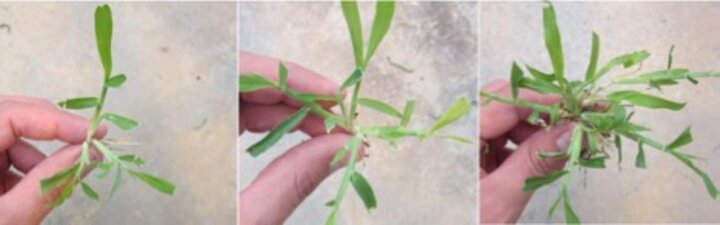
Application of POST herbicides is most effective on small crabgrass and thus June applications are preferred (figure 2). However, crabgrass will continue to germinate well into August, so a PRE should be included in the tankmix at least throughout June and potentially into July. Additionally, higher rates are often required for larger crabgrass plants, which increases the risk of damage to desired turf. Furthermore, crabgrass will start to decline with decreasing daylight hours and cooling temperatures, and will die with the first frost.
Multiple applications
Though most of the POST herbicides can control crabgrass with a single application, control will improve with a second application applied two weeks after the first. The second application will improve control on larger crabgrass plants as well as controlling plants that germinated since the initial application.
Postemergence Herbicide FAQ
How soon can I use POST crabgrass herbicides over the top of new seedings/new sod?
Similar to PRE herbicides, use over new seedlings/sod can be damaging to the cool-season turf. Table 4 lists the application delays.
Is MSMA still being used?
MSMA is no longer sold and is not used as an active ingredient in any herbicide products.
Will crabgrass develop resistance to POST emergence herbicides?
It has been reported with quinclorac on golf course tees (Fischer, 2002; Reicher et al., 2009) and on an athletic field in Alabama with quinclorac resistant on smooth crabgrass (Rutland et al., 2025).
Can goosegrass be controlled selectively with a POST herbicide?
Topramezone (Pylex) is shown to be effective in POST goosegrass herbicide. Fenoxaprop (Acclaim Extra) is another option for POST goosegrass herbicide control. Mesotrione (Tenacity) can partially control goosegrass, but quinclorac (Drive XLR8) showed little effectiveness on goosegrass.
Can Acclaim Extra be mixed with a 3-way broadleaf herbicide?
No, mixing Acclaim Extra with a broadleaf herbicide will limit crabgrass control. Fenoxaprop is combined with fluroxypyr and dicamba with Last Call herbicide, yet has similar results in control to Acclaim Extra.
What are the best herbicides for foxtails?
Any of the PRE herbicides should work effectively on green or yellow foxtail, but a sequential application will likely improve control. The most effective POST herbicide is fenoxaprop (Acclaim Extra), followed by products containing quinclorac. More information on foxtail control applied research from UNL.
References
Agnew, M.L. and N.E, Christians. 1989. Influence of application dates on the effectiveness of four preemergence herbicides for crabgrass control. Proceedings of the Sixth International Turfgrass Research Conference. p. 299-301.
Branham, B. E., and P. E. Rieke. 1986. Effects of Turf Cultivation Practices on the Efficacy of Preemergence Grass Herbicides. Agron. J. 78(6):1089-1091.
Dernoeden, P.H. 1993. November applied preemergence herbicides for smooth crabgrass control the following summer. Int. Turfgrass Soc. Res. J. 7:291-297.
Dernoeden, P. H., M. J. Carroll, and J. M. Krouse. 1993. Weed management and tall fescue quality as influenced by mowing, nitrogen, and herbicides. Crop Sci. 33(5):1055-1061.
Fermanian, T.W., and J.E. Haley. 1994. Fall application of prodiamine for spring crabgrass (Digitaria spp.) control. Weed Technol. 8(3): 612-616.
Fischer, A. 2002. Group 0/4 resistant smooth crabgrass (Digitaria ischaemum) USA: CA.
Johnson, B. J. 1987. Effect of core cultivation on preemergence herbicide activity in bermudagrass. HortScience. 22(3):440.
Keeley, S. J. and H. Zhou. 2005. Preemergence herbicides and seeding method effects on seedling growth of Kentucky bluegrass. Weed Technology 19:43-46.
Kelly, S.T. and G.E. Coates. 1999. Influence of fertilizer particle size on efficacy of dithiopyr, prodiamine, oryzalin, and oxadiazon for southern crabgrass (Digitaria cilaris) control. Weed Technol. 13:385-389.
Patton, A.J. and M. Elmore. 2025. Turfgrass weed control for professionals. Purdue University Extension.
Reicher, Z.J., and C.S. Throssell. 1993. Efficacy of fall and spring-applied preemergence herbicides for annual grass control in Kentucky bluegrass. Int. Turfgrass Soc. Res. J. 7:273-276.
Reicher, Z.J., C.S. Throssell, and J.L. Lefton. 1991. Annual grass control in cool season turf with sequential applications of unlike preemergence herbicides. Weed Technol 5:387-391.
Reicher, Z. J., K. J. Miller, and T. Kahle. 2009. First Report of Quinclorac-Tolerant Biotype of Smooth Crabgrass in Indiana. Purdue turfgrass research report.
Rutland, C. A., B. C. Johnson, J. Patel, J. D. McCurdy, A. Wilber, and J. S. McElroy. 2025. Identification of quinclorac-resistant smooth crabgrass (Digitaria iscaemum) population in Alabama. Int. Turfgrass Soc. Res. J. 15(1):196-203.
Voigt, T.B., T.W. Fermanian, and J.E. Haley. 2001. Influence of mowing and nitrogen fertility on tall fescue turf. Int. Turfgrass Soc. Res. J. 9:953-956.
Originally known as Lawn Care Professional Series: Controlling crabgrass and other annual grassy weeds (2010), University of Nebraska-Lincoln Turfgrass Science Program, Pub. Turf 2010b by Chris Proctor, Zac Reicher, and Roch Gaussoin & Crabgrass control in home lawns (2010), University of Nebraska-Lincoln Turfgrass Science Program, Pub. Turf 2010d by Zac Reicher and Roch Gaussoin.
Edited and Reviewed by:
Amanda Folck, Assistant Extension Educator: Turfgrass Management, Agronomy and Horticulture Department
Chris Proctor, Extension Educator, Agronomy and Horticulture Department
John Fech, Extension Educator, Nebraska Extension
Updated April 1, 2026
Rate Tables
Table 2. Pounds/Acre of herbicide/fertilizer combo products need given the desired rate in lbs active ingredient in the product.
Recommended rate of herbicides in lbs ai/Acre | |||||||||||||||||||||||
|---|---|---|---|---|---|---|---|---|---|---|---|---|---|---|---|---|---|---|---|---|---|---|---|
| 0.13 | 0.25 | 0.30 | 0.35 | 0.38 | 0.40 | 0.45 | 0.50 | 0.55 | 0.65 | 0.70 | 0.80 | 0.90 | 1.00 | 1.25 | 1.50 | 1.75 | 2.00 | 2.25 | 2.50 | 2.75 | 3.00 | |
% A.I in Herbicide+fert combo in label
| 0.07 | 179 | 357 | 429 | 500 | 543 | 571 | 643 | 714 | 786 | 929 | 1000 | 1143 | 1286 | 1429 | 1786 | 2143 | 2500 | 2857 | 3214 | 3571 | 3929 | 4286 |
0.10 | 125 | 250 | 300 | 350 | 380 | 400 | 450 | 500 | 550 | 650 | 700 | 800 | 900 | 1000 | 1250 | 1500 | 1750 | 2000 | 2250 | 2500 | 2750 | 3000 | |
0.125 | 100 | 200 | 240 | 280 | 304 | 320 | 380 | 400 | 440 | 520 | 560 | 640 | 720 | 800 | 1000 | 1200 | 1400 | 1600 | 1800 | 2000 | 2200 | 2400 | |
0.15 | 83 | 167 | 200 | 233 | 253 | 267 | 300 | 333 | 367 | 433 | 467 | 533 | 600 | 667 | 833 | 1000 | 1167 | 1333 | 1500 | 1667 | 1833 | 2000 | |
0.20 | 63 | 125 | 150 | 175 | 190 | 200 | 225 | 250 | 275 | 325 | 350 | 400 | 450 | 500 | 625 | 750 | 875 | 1000 | 1125 | 1250 | 1375 | 1500 | |
0.21 | 60 | 119 | 143 | 167 | 181 | 190 | 214 | 238 | 262 | 310 | 333 | 381 | 429 | 476 | 595 | 714 | 833 | 952 | 1071 | 1190 | 1310 | 1429 | |
0.25 | 50 | 100 | 120 | 140 | 152 | 160 | 180 | 200 | 220 | 260 | 280 | 320 | 360 | 400 | 500 | 600 | 700 | 800 | 900 | 1000 | 1100 | 1200 | |
0.29 | 43 | 86 | 103 | 121 | 131 | 138 | 155 | 172 | 190 | 224 | 241 | 276 | 310 | 345 | 431 | 517 | 603 | 690 | 776 | 862 | 948 | 1034 | |
0.35 | 36 | 71 | 86 | 100 | 109 | 114 | 129 | 143 | 157 | 186 | 200 | 229 | 257 | 286 | 357 | 429 | 500 | 571 | 643 | 714 | 786 | 857 | |
0.40 | 31 | 63 | 75 | 88 | 95 | 100 | 113 | 125 | 138 | 163 | 175 | 200 | 225 | 250 | 313 | 375 | 438 | 500 | 563 | 625 | 688 | 750 | |
0.43 | 29 | 58 | 70 | 81 | 88 | 93 | 105 | 116 | 128 | 151 | 163 | 186 | 209 | 233 | 291 | 349 | 407 | 465 | 523 | 581 | 640 | 698 | |
0.45 | 28 | 56 | 67 | 78 | 84 | 89 | 100 | 111 | 122 | 144 | 156 | 178 | 200 | 222 | 278 | 333 | 389 | 444 | 500 | 556 | 611 | 667 | |
0.50 | 25 | 50 | 60 | 70 | 76 | 80 | 90 | 100 | 110 | 130 | 140 | 160 | 180 | 200 | 250 | 300 | 350 | 400 | 450 | 500 | 550 | 600 | |
0.55 | 23 | 45 | 55 | 64 | 69 | 73 | 82 | 91 | 100 | 118 | 127 | 145 | 164 | 182 | 227 | 273 | 318 | 364 | 409 | 455 | 500 | 545 | |
0.60 | 21 | 42 | 50 | 58 | 63 | 67 | 75 | 83 | 92 | 108 | 117 | 133 | 150 | 167 | 208 | 250 | 292 | 333 | 375 | 417 | 458 | 500 | |
0.66 | 19 | 38 | 46 | 53 | 58 | 61 | 69 | 76 | 84 | 99 | 107 | 122 | 137 | 152 | 191 | 229 | 267 | 305 | 343 | 381 | 419 | 457 | |
0.70 | 18 | 36 | 43 | 50 | 54 | 57 | 64 | 71 | 79 | 93 | 100 | 114 | 129 | 143 | 179 | 214 | 250 | 286 | 321 | 357 | 393 | 429 | |
0.75 | 17 | 33 | 40 | 47 | 51 | 53 | 60 | 67 | 73 | 87 | 93 | 107 | 120 | 133 | 167 | 200 | 233 | 267 | 300 | 333 | 367 | 400 | |
0.80 | 16 | 31 | 38 | 44 | 48 | 50 | 56 | 63 | 69 | 81 | 88 | 100 | 113 | 125 | 156 | 188 | 219 | 250 | 281 | 313 | 344 | 375 | |
0.86 | 15 | 29 | 35 | 41 | 44 | 47 | 52 | 58 | 64 | 76 | 81 | 93 | 105 | 116 | 145 | 174 | 203 | 233 | 262 | 291 | 320 | 349 | |
0.90 | 14 | 28 | 33 | 39 | 42 | 44 | 50 | 56 | 61 | 72 | 78 | 89 | 100 | 111 | 139 | 167 | 194 | 222 | 250 | 278 | 306 | 333 | |
1.00 | 13 | 25 | 30 | 35 | 38 | 40 | 45 | 50 | 55 | 65 | 70 | 80 | 90 | 100 | 125 | 150 | 175 | 200 | 225 | 250 | 275 | 300 | |
1.10 | 11 | 23 | 27 | 32 | 35 | 36 | 41 | 45 | 50 | 59 | 64 | 73 | 82 | 91 | 114 | 136 | 159 | 182 | 205 | 227 | 250 | 273 | |
1.20 | 10 | 21 | 25 | 29 | 32 | 33 | 38 | 42 | 46 | 54 | 58 | 67 | 75 | 83 | 104 | 125 | 146 | 167 | 188 | 208 | 229 | 250 | |
1.31 | 10 | 19 | 23 | 27 | 29 | 31 | 34 | 38 | 42 | 50 | 53 | 61 | 69 | 76 | 95 | 115 | 134 | 153 | 172 | 191 | 210 | 229 | |
1.40 | 9 | 18 | 21 | 25 | 27 | 29 | 32 | 36 | 39 | 46 | 50 | 57 | 64 | 71 | 89 | 107 | 125 | 143 | 161 | 179 | 196 | 214 | |
1.50 | 8 | 17 | 20 | 23 | 25 | 27 | 30 | 33 | 37 | 43 | 47 | 53 | 60 | 67 | 83 | 100 | 117 | 133 | 150 | 167 | 183 | 200 | |
Pounds/Acre = lbs ai/A recommended ÷ % active ingredient**
**Note convert percent to decimal before calculation by dividing by 100 (.07%=0.0007 or 0.1%=0.001)
Table 3. Amount of fertilizer or fertilizer herbicide combo required given the percent fertilizer in the product and desired rate in lbs N/ 1000 sq ft or lbs N/Acre.
|
| lbs N/1000 (M) | lbs N/Acre (A) | lbs N/M | lbs N/A | lbs N/M | lbs N/A | lbs N/M | lbs N/A | lbs N/M | lbs N/A | lbs N/M | lbs N/A | lbs N/M | lbs N/A | lbs N/M | lbs N/A | lbs N/M | lbs N/A | lbs N/M | lbs N/A | lbs N/M | lbs N/A |
|---|---|---|---|---|---|---|---|---|---|---|---|---|---|---|---|---|---|---|---|---|---|---|---|
|
| 0.25 | 11 | 0.40 | 17 | 0.50 | 22 | 0.60 | 26 | 0.70 | 30 | 0.75 | 33 | 0.80 | 35 | 0.90 | 39 | 1.00 | 44 | 1.25 | 54 | 1.50 | 65 |
% N in fertilizer of fertilizer/pest combo | 1 | 25.0 | 1089 | 40 | 1742 | 50 | 2178 | 60.0 | 2614 | 70 | 3049 | 75 | 3267 | 80 | 3485 | 90 | 3920 | 100 | 4356 | 125 | 5445 | 150 | 6534 |
2 | 13.0 | 545 | 20 | 871 | 25 | 1089 | 30.0 | 1307 | 35 | 1525 | 38 | 1634 | 40 | 1742 | 45 | 1960 | 50 | 2178 | 63 | 2723 | 75 | 3267 | |
3 | 8.3 | 363 | 13.3 | 581 | 17 | 726 | 20.0 | 871 | 23 | 1016 | 25 | 1089 | 27 | 1162 | 30 | 1307 | 33 | 1452 | 42 | 1815 | 50 | 2178 | |
4 | 6.3 | 272 | 10 | 436 | 13 | 545 | 15.0 | 653 | 18 | 762 | 19 | 817 | 20 | 871 | 23 | 980 | 25 | 1089 | 31 | 1361 | 38 | 1634 | |
5 | 5.0 | 218 | 8.0 | 348 | 10 | 436 | 12.0 | 523 | 14 | 610 | 15 | 653 | 16 | 697 | 18 | 784 | 20 | 871 | 25 | 1089 | 30 | 1307 | |
6 | 4.2 | 182 | 6.7 | 290 | 8.3 | 363 | 10.0 | 436 | 12 | 508 | 13 | 545 | 13 | 581 | 15 | 653 | 17 | 726 | 21 | 908 | 25 | 1089 | |
7 | 3.6 | 156 | 5.7 | 249 | 7.1 | 311 | 8.6 | 373 | 10 | 436 | 11 | 467 | 11 | 498 | 13 | 560 | 14 | 622 | 18 | 778 | 21 | 933 | |
8 | 3.1 | 136 | 5.0 | 218 | 6.3 | 272 | 7.5 | 327 | 8.8 | 381 | 9.4 | 408 | 10 | 436 | 11 | 490 | 13 | 545 | 16 | 681 | 19 | 817 | |
9 | 2.8 | 121 | 4.4 | 194 | 5.6 | 242 | 6.7 | 290 | 7.8 | 339 | 8.3 | 363 | 8.9 | 387 | 10 | 436 | 11 | 484 | 14 | 605 | 17 | 726 | |
10 | 2.5 | 109 | 4.0 | 174 | 5 | 218 | 6.0 | 261 | 7.0 | 305 | 7.5 | 327 | 8.0 | 348 | 9 | 392 | 10 | 436 | 13 | 545 | 15 | 653 | |
11 | 2.3 | 99 | 3.6 | 158 | 4.5 | 198 | 5.5 | 238 | 6.4 | 277 | 6.8 | 297 | 7.3 | 317 | 8.2 | 356 | 9.1 | 396 | 11 | 495 | 14 | 594 | |
12 | 2.1 | 91 | 3.3 | 145 | 4.2 | 182 | 5.0 | 218 | 5.8 | 254 | 6.3 | 272 | 6.7 | 290 | 7.5 | 327 | 8.3 | 363 | 10 | 454 | 13 | 545 | |
13 | 1.9 | 84 | 3.1 | 134 | 3.8 | 168 | 4.6 | 201 | 5.4 | 235 | 5.8 | 251 | 6.2 | 268 | 6.9 | 302 | 7.7 | 335 | 9.6 | 419 | 12 | 503 | |
14 | 1.8 | 78 | 2.9 | 124 | 3.6 | 156 | 4.3 | 187 | 5.0 | 218 | 5.4 | 233 | 5.7 | 249 | 6.4 | 280 | 7.1 | 311 | 8.9 | 389 | 11 | 467 | |
15 | 1.7 | 73 | 2.7 | 116 | 3.3 | 145 | 4.0 | 174 | 4.7 | 203 | 5.0 | 218 | 5.3 | 232 | 6 | 261 | 6.7 | 290 | 8.3 | 363 | 10 | 436 | |
16 | 1.6 | 68 | 2.5 | 109 | 3.1 | 136 | 3.8 | 163 | 4.4 | 191 | 4.7 | 204 | 5.0 | 218 | 5.6 | 245 | 6.3 | 272 | 7.8 | 340 | 9.4 | 408 | |
17 | 1.5 | 64 | 2.4 | 102 | 2.9 | 128 | 3.5 | 154 | 4.1 | 179 | 4.4 | 192 | 4.7 | 205 | 5.3 | 231 | 5.9 | 256 | 7.4 | 320 | 8.8 | 384 | |
18 | 1.4 | 61 | 2.2 | 97 | 2.8 | 121 | 3.3 | 145 | 3.9 | 169 | 4.2 | 182 | 4.4 | 194 | 5 | 218 | 5.6 | 242 | 6.9 | 303 | 8.3 | 363 | |
19 | 1.3 | 57 | 2.1 | 92 | 2.6 | 115 | 3.2 | 138 | 3.7 | 160 | 3.9 | 172 | 4.2 | 183 | 4.7 | 206 | 5.3 | 229 | 6.6 | 287 | 7.9 | 344 | |
20 | 1.2 | 54 | 2.0 | 87 | 2.5 | 109 | 3.0 | 131 | 3.5 | 152 | 3.8 | 163 | 4.0 | 174 | 4.5 | 196 | 5.0 | 218 | 6.3 | 272 | 7.5 | 327 | |
21 | 1.1 | 52 | 1.9 | 83 | 2.4 | 104 | 2.9 | 124 | 3.3 | 145 | 3.6 | 156 | 3.8 | 166 | 4.3 | 187 | 4.8 | 207 | 6.0 | 259 | 7.1 | 311 | |
22 | 1.1 | 50 | 1.8 | 79 | 2.3 | 99 | 2.7 | 119 | 3.2 | 139 | 3.4 | 149 | 3.6 | 158 | 4.1 | 178 | 4.5 | 198 | 5.7 | 248 | 6.8 | 297 | |
23 | 1.1 | 47 | 1.7 | 76 | 2.2 | 95 | 2.6 | 114 | 3 | 133 | 3.3 | 142 | 3.5 | 152 | 3.9 | 170 | 4.3 | 189 | 5.4 | 237 | 6.5 | 284 | |
24 | 1.0 | 45 | 1.7 | 73 | 2.1 | 91 | 2.5 | 109 | 2.9 | 127 | 3.1 | 136 | 3.3 | 145 | 3.8 | 163 | 4.2 | 182 | 5.2 | 227 | 6.3 | 272 | |
25 | 1.0 | 44 | 1.6 | 70 | 2 | 87 | 2.4 | 105 | 2.8 | 122 | 3.0 | 131 | 3.2 | 139 | 3.6 | 157 | 4.0 | 174 | 5.0 | 218 | 6.0 | 261 | |
26 | 1.0 | 42 | 1.5 | 67 | 1.9 | 84 | 2.3 | 101 | 2.7 | 117 | 2.9 | 126 | 3.1 | 134 | 3.5 | 151 | 3.8 | 168 | 4.8 | 209 | 5.8 | 251 | |
27 | 0.9 | 40 | 1.5 | 65 | 1.9 | 81 | 2.2 | 97 | 2.6 | 113 | 2.8 | 121 | 3.0 | 129 | 3.3 | 145 | 3.7 | 161 | 4.6 | 202 | 5.6 | 242 | |
28 | 0.9 | 39 | 1.4 | 62 | 1.8 | 78 | 2.1 | 93 | 2.5 | 109 | 2.7 | 117 | 2.9 | 124 | 3.2 | 140 | 3.6 | 156 | 4.5 | 194 | 5.4 | 233 | |
29 | 0.9 | 38 | 1.4 | 60 | 1.7 | 75 | 2.1 | 90 | 2.4 | 105 | 2.6 | 113 | 2.8 | 120 | 3.1 | 135 | 3.4 | 150 | 4.3 | 188 | 5.2 | 225 | |
30 | 0.8 | 36 | 1.3 | 58 | 1.7 | 73 | 2.0 | 87 | 2.3 | 102 | 2.5 | 109 | 2.7 | 116 | 3 | 131 | 3.3 | 145 | 4.2 | 182 | 5.0 | 218 | |
32 | 0.8 | 34 | 1.3 | 54 | 1.6 | 68 | 1.9 | 82 | 2.2 | 95 | 2.3 | 102 | 2.5 | 109 | 2.8 | 123 | 3.1 | 136 | 3.9 | 170 | 4.7 | 204 | |
34 | 0.7 | 32 | 1.2 | 51 | 1.5 | 64 | 1.8 | 77 | 2.1 | 90 | 2.2 | 96 | 2.4 | 102 | 2.6 | 115 | 2.9 | 128 | 3.7 | 160 | 4.4 | 192 | |
38 | 0.7 | 29 | 1.1 | 46 | 1.3 | 57 | 1.6 | 69 | 1.8 | 80 | 2.0 | 86 | 2.1 | 92 | 2.4 | 103 | 2.6 | 115 | 3.3 | 143 | 3.9 | 172 | |
46 | 0.5 | 24 | 0.9 | 38 | 1.1 | 47 | 1.3 | 57 | 1.5 | 66 | 1.6 | 71 | 1.7 | 76 | 2 | 85 | 2.2 | 95 | 2.7 | 118 | 3.3 | 142 |
Pounds N/ 1000 sq ft= N rate in lbs N/ 1000 ÷ %N**
Pounds N/ Acre= N rate in lbs N/A ÷ % N**
**Note convert percent to decimal before calculation by dividing by 100 (0.07%=0.0007, or 0.1%=0.001)
Herbicide Label Restrictions
Table 4. Label restrictions for PRE or POST crabgrass herbicides when used over newly established turf.
Refer to the Turfgrass Weed Control for Professionals from Purdue University Extension, in collaboration with UNL (EC3011), for updated information on herbicides for your respective area.
Group # | Active Ingredient | Example Trade Name(s) | Turfgrass Safetyt* | Tiller stage of crabgrass or other related weed control | Recommended Adjuvant on Pesticide Label | Notes* |
|---|---|---|---|---|---|---|
3 | prodiamine | Barricade | Safe on most species with proper rate | Preemergent for SAG, ABG, to small-seeded broadleaves | - | Not apply on grass <0.5 inch height, restriction of limit in active ingredient (see label), wait 4-6 months before reseeding. Wait 60 days after seeding or until after the second mowing, whichever is longer. |
3 | pendimethalin | Pendulum | Safe on most species with proper rate | Preemergent for SAG, ABG, to small-seeded broadleaves | - | Not on grass in result of damage from winter stress, cannot reseed until 4 months after application. Applications made after turf has filled in and at least 4 mowings. |
14 | oxadiazon | Ronstar | Safe on most species with proper rate | Preemergent for SAG (including goosegrass), ABG, to small-seeded broadleaves | Do not apply any adjuvants | This is a Restricted Use Pesticide (RUP) and applies to establish turf only. Not for use on residential turf, granular use for cool-season grass. Delay seeding 4 months after application. Not for use on wet turf and irrigate after application. |
3 | dithiopyr | Dimension | Safe on most species with proper rate | Preemergent for SAG, ABG, to small-seeded broadleaves Up to 1 tiller for PRE + POST | - | Can be used as a preemergence and postemergence for crabgrass. Do not apply sprig, overseeding, or reseeding until 3 months after application. Applications to well-established turf with good root system, uniform stand and has received at least two mowings. |
1 | fenoxaprop | Acclaim Extra | Fine fescue, Kentucky bluegrass, perennial ryegrass, tall fescue, zoysiagrass | Up to 5 tillers, goosegrass, sandbur, to yellow foxtail | Nonionic surfactant | May injure creeping bentgrasst, rates vary depending on crabgrass developments. Limited to 9 oz/A on Kentucky bluegrass that has tillered and has emerged for 1 month. Can be applied to tall fescue, fine fescue, perennial ryegrass that is at least four weeks old. |
1 | fluazifop | Fusilade II Ornamec | Tall fescue, zoysiagrass | 2 to 8 inches tall; before tillering/seed head production | Nonionic surfactant | Ornamec may be used in residential lawns |
27 | mesotrione | Tenacity | Buffalograss, fine fescue, Kentucky bluegrass, perennial ryegrass, tall fescue | <4 tillers | Nonionic surfactant | Apply before or at seeding or >4 weeks after emergence of desirable species. |
4 | quinclorac | Drive XLR8, Quinclorac 75DF, Quinclorac 1.5L | Safe on most species with proper rate | <2 or >4 tillers | Crop oil concentrate or methylated seed oil | May injure creeping bentgrasst and fine fescue. Can be applied 7 days prior to seeding on any cool season turfgrass. Can be applied anytime after seeding on tall fescue, but must wait 28 days after emergence of perennial ryegrass or Kentucky bluegrass. |
1 | sethoxydim | Segment II | Fine fescues | Before well-tillered | - | Only for use in fine fescues and do NOT use on tall fescue. |
27 | topramezone | Pylex | Fine fescues, Kentucky bluegrass, perennial ryegrass, tall fescue | <4 tillers, goosegrass, sandbur, to windmillgrass | Crop oil concentrate or methylated seed oil | Apply before or at seeding, or >4 weeks after seeding, creeping bentgrasst is marginally tolerant. |
| SAG: Summer Annual Grass; ABG: Annual Bluegrass tThere are currently no registered products for postemergence crabgrass control in creeping bentgrass putting greens. *Read the specific label of the herbicide for more information not included in this table. | |||||
Math Calculations Review
Calculating lbs product/A given the rate in lbs ai/A
lbs product/Acre = lbs ai/A recommended ÷ % active ingredient (as a decimal**)
** Be sure to convert % to decimal before calculating; 0.07%=.0007, 0.10%=.001
Calculating lbs ai/A given the rate in lbs product/A
lbs ai/Acre = pounds product/A recommended × % active ingredient (as a decimal**)
** Be sure to convert % to decimal before calculating; 0.07%=.0007, 0.10%=.001
Calculating lbs N/1000 sq ft /A given application rate in lbs product/A
lbs product/ 1000 sq ft= lbs product/Acre ÷ 43.56
lbs N/ 1000 sq ft= lbs product/ 1000 sq ft × % N (as a decimal**)
** Be sure to convert % to decimal before calculating; 0.07%=.0007, 0.10%=.001
Calculating price per acre:
Price per Acre = [price ÷ Units (lbs)] × lbs product recommended/ acre
For example: 20-4-10 with 0.13% Dimension is applied at 189 lbs/A or 0.25 lbs ai/A and costs $31 for one 50 lb bag.
What is the cost of the bag per acre?
= [$31÷50 lbs] × 192 lbs/A
= $119.04 per acre