Introduction
2025 Reflections
The 2025 year marked a period of transition for the University of Nebraska–Lincoln Turfgrass Science and Management program. Across the University, ongoing budget constraints, program restructuring, and personnel changes created a sense of uncertainty that was felt in many of our academic programs. Even so, these challenges also highlighted the resilience and relevance of our turfgrass program. Rather than slowing our momentum, this period encouraged us to evaluate our priorities, strengthen our collaborations, and look ahead with a renewed commitment to serving the turfgrass industry.
Despite the unusual year, our program continued to deliver impactful research addressing the practical needs of turfgrass managers. Our team advanced projects aimed at improving water efficiency, reducing inputs, optimizing management strategies, and identifying solutions to emerging challenges in Nebraska. Industry engagement remained central to our efforts, allowing us to test new products, gather real‑world feedback, and ensure our work remains aligned with future needs.
Extension and outreach remained strong throughout the year. We continued to provide timely, research‑based recommendations through workshops, conferences, field days, and digital platforms. The demand for reliable information did not diminish, and our team responded with the same dedication that turf professionals across the state have come to expect. Collaboration with the Nebraska Department of Agriculture again ensured that pesticide applicator training and continuing education opportunities remained accessible to practitioners.
Our commitment to educating future turfgrass professionals remained a priority as well. Students continued to gain hands‑on experience, compete in academic contests, and engage with industry leaders through internships, site visits, and scholarship programs. Even amid institutional shifts, our graduates remained highly competitive for positions in turfgrass management, production, and research, an encouraging sign of the strength of our curriculum and industry partnerships.
We are grateful for the continued support of the Nebraska Turfgrass Association, Nebraska Golf Course Superintendents Association, Nebraska Sports Field Management Association, United States Golf Association, and many additional industry collaborators. Their investment in our work, through financial support, access to facilities and equipment, and participation in collaborative projects, played a crucial role in maintaining program stability during a year of change.
As we look forward, we do so with optimism. The challenges of 2025 underscored the importance of strong partnerships and adaptable leadership. They also confirmed that our program is built on a foundation capable of carrying us through uncertainty while opening new opportunities for innovation, impact, and growth. This report highlights key accomplishments from the past year and reflects the strength of the community that supports turfgrass science at UNL.
Sincerely,
Keenan Amundsen, PhD
Turfgrass Geneticist

2025 Facilities Update
We currently manage two turfgrass research facilities including the John Seaton Anderson (JSA) Turfgrass and Ornamental Research facility near Mead and the East Campus Turf Farm, on the north end of East Campus in Lincoln. We are also fortunate to coordinate on-farm research with parks, athletic fields, golf courses, campus landscapes, and grass producers. On-farm research helps us translate our research into practical recommendations for turfgrass managers and we are thankful to our supporters and access to their facilities!
Research Areas Update
John Seaton Anderson (JSA) Turfgrass and Ornamental Research Facility
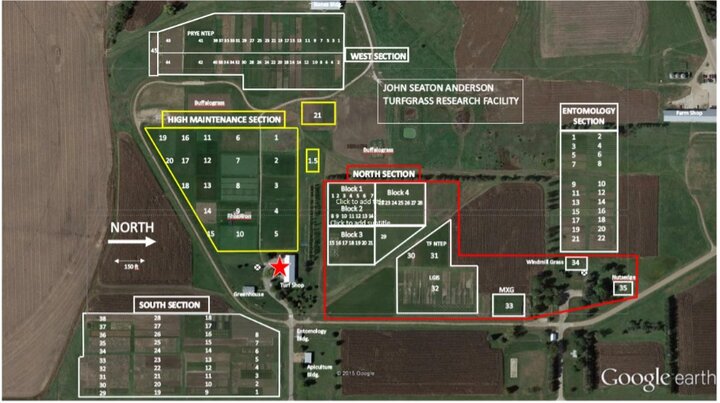
The JSA facility is the location of our primary shops, equipment maintenance and storage. The facility has nearly 70 acres available for turf research and is still considered among the largest irrigated turf research farms in the country. It is also the site of long term research projects and those that require more space. The facility is currently used for bermudagrass nursery plots, buffalograss germplasm maintenance, seed increase trials, and turf evaluations.
The John Seaton Anderson (JSA) Turfgrass and Ornamental Research facility near Mead, NE is used by program faculty for plant breeding germplasm maintenance, seed and sod increase of experimental turfgrasses, long-term research trials, production-scale nurseries, and equipment maintenance and storage.
East Campus Turfgrass Farm

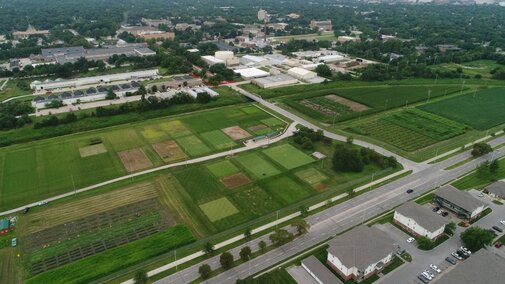
The proximity of the East Campus Turf Farm provides opportunities for student labs and projects, daily research and evaluation, and reduces travel time and fuel expenses traveling to JSA. The East Campus Turf Farm is the primary research farm used by turfgrass sciences program staff, faculty, and students. The proximity of the facility to campus enables student led projects to support their training in turfgrass sciences.
The facility is primarily used for high-valued turf projects that require more intensive evaluations. It currently has three National Turfgrass Evaluation Program Trials (Kentucky bluegrass, perennial ryegrass, and tall fescue), 10 separate (NTEP) trials, 10 buffalograss evaluation trials, studies, an evaluation of bermudagrass for sports turf field performance, and many more.
Other Resources
Other Resources
Our program collaborates on several molecular biology and genetics trials. The research is not directly applicable to applied turfgrass management but contributes substantially to new germplasm and optimized management practices. At the University of Nebraska-Lincoln, our turfgrass sciences program has 1,500 sq ft of dedicated laboratory space supporting genetics research, and we have access ot the Univeristy supercomputers supporting DNA sequence analysis, modeling, and evaluation statistical analyses.
In addition to campus facilities, on-farm research is invaluable to our program and we thank our cooperators for giving us access to their athletic fields, golf course putting green aerification and topdressing trials, courses, parks, roadsides, sod, and product evaluation trials.
Turfgrass Associations and Sponsors to UNL Turfgrass Science Program















Special thanks to all of our sponsors including those whose logo is not shown here.
Personnel in UNL Turfgrass Science Program
Personnel Information
Faculty and Staff
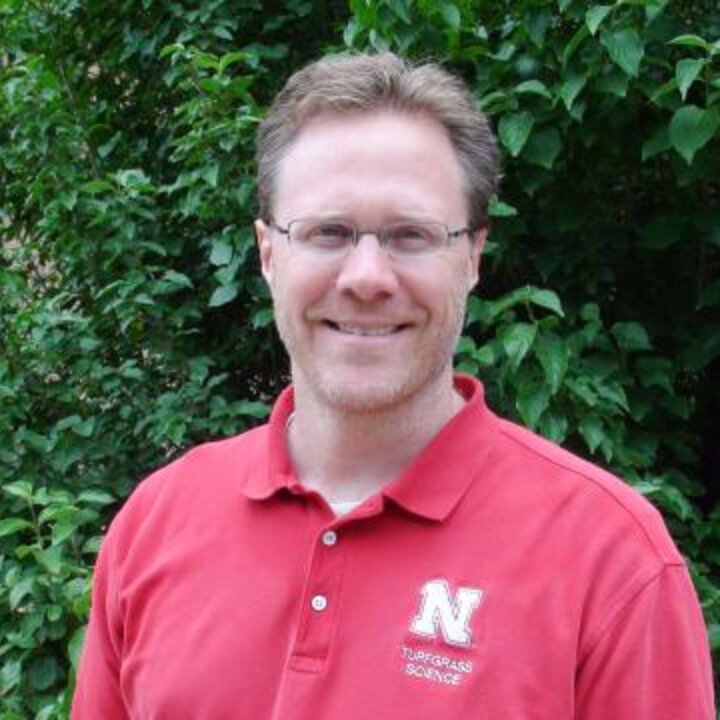

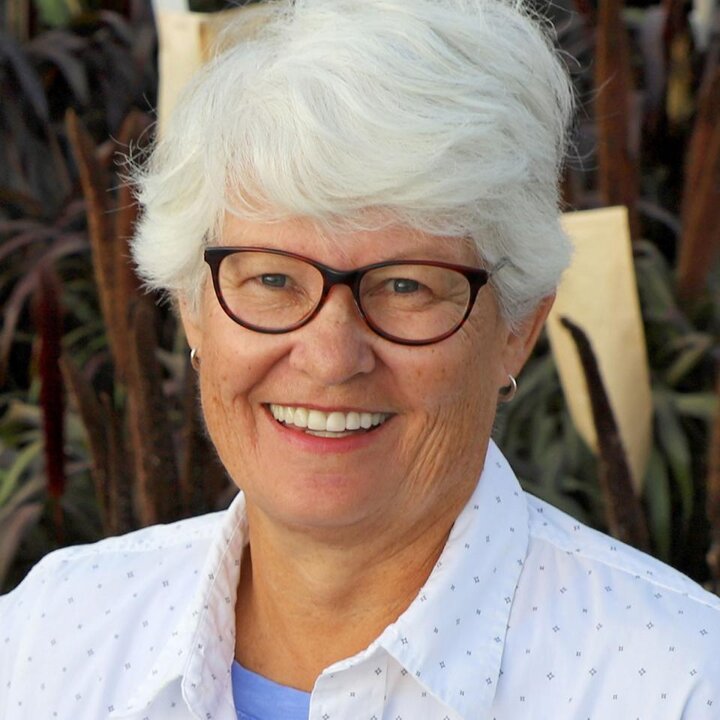
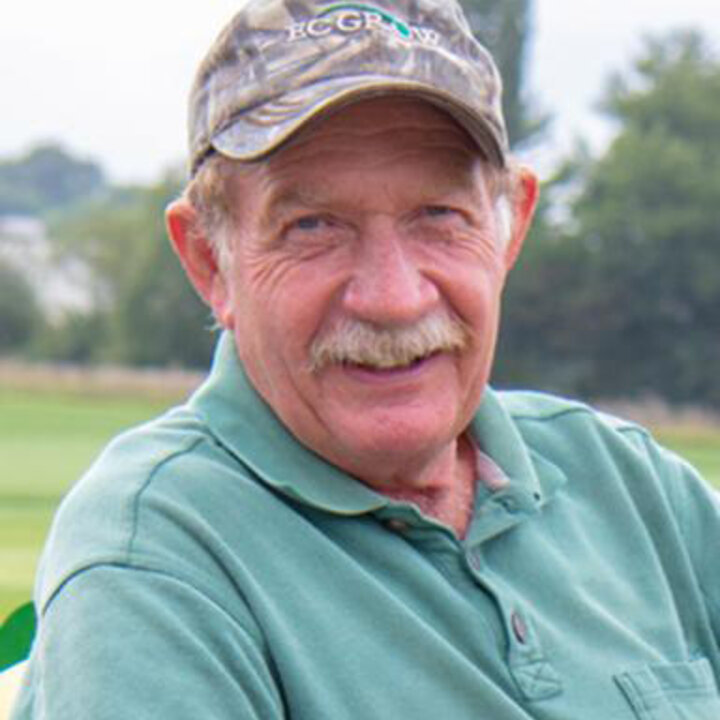


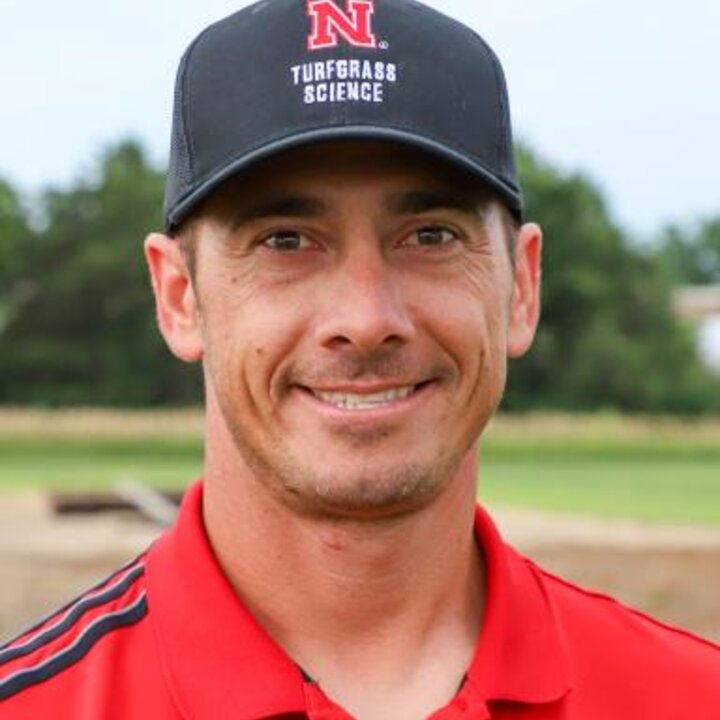

Graduate Students & Postdocs
Kristinia Alas, PhD student
Krishna Ghimire, Postdoctoral researcher
Undergraduate Students
Max Mueller, Plant and Landscape Systems (PLAS), Agronomy (AGRY) emphasis
Shane Rotenberger, PLAS, Turfgrass Science and Management (TSM) emphasis
Evan Konz, Professional Golf Management (PGM)
Samual Norrenberns, PGM and PLAS-TSM
Personnel Changes
Info Personnel Changes
Matt Sousek
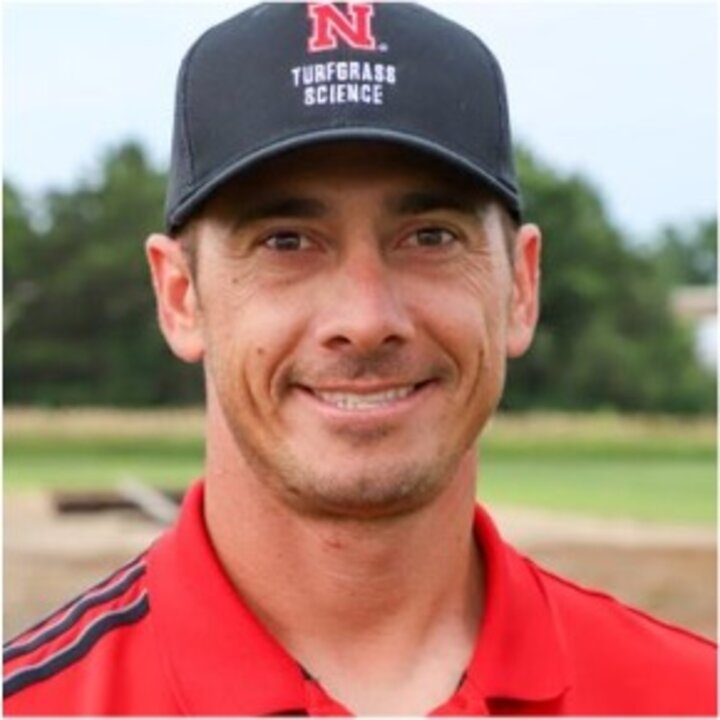
Matt Sousek has been a familiar face of the turfgrass science program for 17 years. Matt has contributed to the program in numerous ways, including sitting in the turf chair on Backyard Farmer, managing industry trials, evaluating new products, often serving as a first contact point for turf management questions from homeowners to industry professionals, and managing our turf research facilities for 10 years.
Matt’s dedication to the program was infectious and he served as an informal mentor to faculty, staff, students, and others. He was always willing to lend a hand and will be missed.
In September of this year, Matt left the University to pursue other opportunities, and we wish him the absolute best on his new adventures and extend a warm thank you for his dedication and support of our turf program.
Collin Eaton

Our department identified a creative solution to filling the vacancy created by Matt’s departure. Even within the current hiring and budgetary constraints, we were encouraged to partner with the Husker Produce Farm and hire a farm manager that will provide oversight to both programs.
Join us in welcoming Collin Eaton, who will start January 1st , 2026 as the farm manager. Collin does not have much direct turf management experience, but he has worked at the Produce Farm next to the East Campus Turf farm and has a lot of familiarity with our operations. Collin is a Nebraska native from Columbus and graduated from UNL, majoring in Plant Biology with an emphasis in Ecology and Management. He is excited to learn more about our operations, support research and management in a new area, and continue to develop professional skills.
Collin will be a great asset to our program moving forward, and we are looking forward to training him about managing perennial grasses in swards mowed at 3 inches. Be sure to introduce yourself to Collin and welcome him to our team.